2026 Ninth International Conference
on
Parallel, Distributed and Grid Computing (PDGC-2026)
19-21 November, 2026
Department of Computer Science & Engineering and Information Technology
Jaypee University of Information Technology
IEEE Conference Record Number: 73007
In Hybrid Mode
Theme of the conference:
Parallel, Distributed, and Grid Computing for Scalable, Intelligent, and Sustainable Systems
Note:
All papers accepted and presented at the conference will be submitted to IEEE Xplore for possible publication, subject to meeting IEEE’s quality standards and publication requirements.
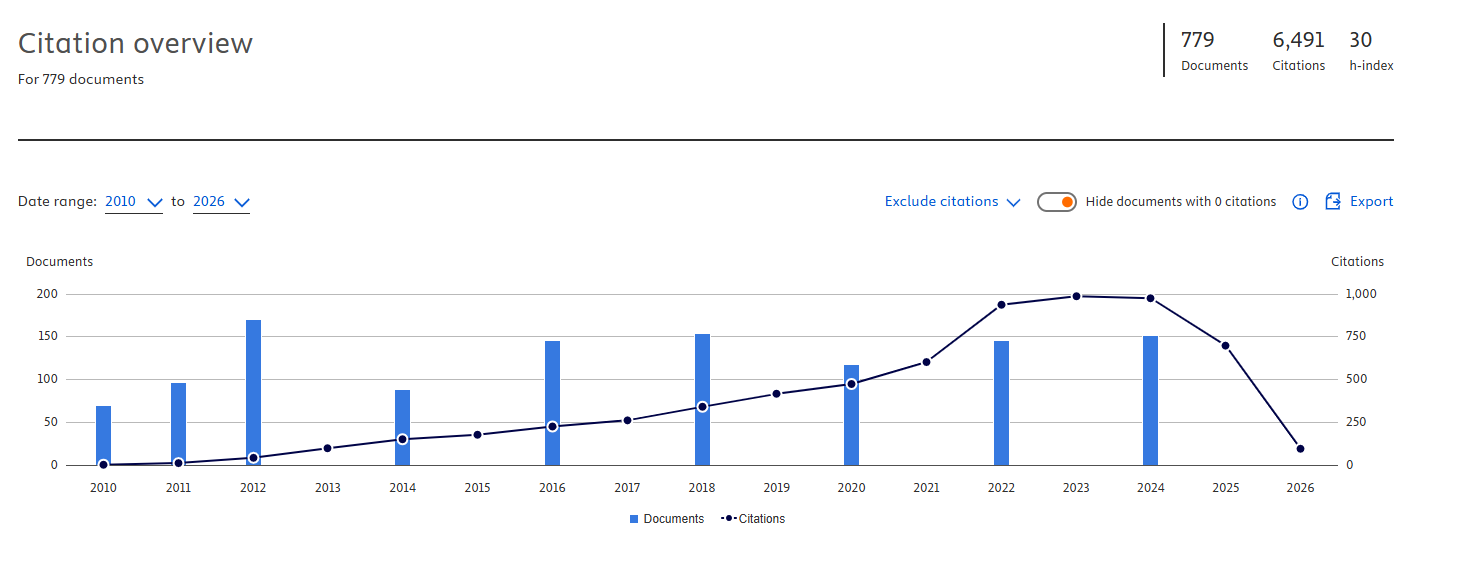 |
Scopus H-Index of the previous PDGC Conferences {Click on the image to enlarge}
Keynote Speakers
Prominent international keynote speakers will be presenting the state of art in research in Parallel, Distributed and Grid Computing. (Click here to see more..)
PDGC-2026
2026 Ninth International Conference on Parallel, Distributed and Grid Computing (PDGC) will be organized at Jaypee University of Information Technology, Waknaghat, Solan, Himachal Pradesh, India. PDGC-2026 will serve as an international forum for researchers and practitioners interested in recent advances in the areas of parallel, distributed and grid computing. It will provide an opportunity to present and exchange advanced scientific and technological information in hardware, software and theoretical foundation in these areas.
Venue
Jaypee University of Information Technology is located at Waknaghat, Solan, Himachal Pradesh 173234, India. It is situated near Shimla (24 Km) just 3 Km off the NH22 (Delhi-Ambala-Kalka-Waknaghat-Shimla road). Convenient airports are Shimla (30 Km), Chandigarh (100 Km), New Delhi (350 Km) and Amritsar (350 Km).
THE TOPICS OF INTEREST INCLUDE, BUT ARE NOT LIMITED TO THE FOLLOWING TRACKS:
Track 1: Parallel Algorithms and Architectures(Track Chair:Dr. Balvir Singh Thakur, UIIT, HPU Shimla, HP, India; 2)Dr. Yogesh Mohan, HPU Shimla, HP, India)
This track focuses on theoretical and practical advances in parallel computing paradigms and hardware architectures enabling scalable performance.The topics include, but are not limited to:
- Multi-core, many-core, and heterogeneous architectures
- GPU, TPU, FPGA, and accelerator-based computing
- Communication-efficient parallel algorithms
- Parallel graph and numerical algorithms
- Memory hierarchies and interconnect networks
- Cache coherence and synchronization mechanisms
- Programming models (OpenMP, CUDA, MPI, SYCL, etc.)
- Compiler optimizations for parallel systems
- Performance analysis of parallel programs
Track 2: Distributed Systems and Middleware(Track Chairs:1) Prof. (Dr.) Sushil Bansal, Maharaja Agrasen University, Baddi, HP, India; 2) Mr. Gaurav Thakur, Central University of Jammu, Jammu, India)
This track addresses system-level design, reliability, and middleware technologies for scalable distributed infrastructures. The topics include, but are not limited to:
- Distributed system architectures and design patterns
- Consistency models and distributed consensus
- Fault tolerance and self-healing systems
- Middleware frameworks and service orchestration
- Microservices and container-based systems
- Distributed storage and file systems
- Observability and monitoring in distributed systems
- Scalable messaging systems
Track 3: Cloud, Grid, and Resource Management Systems(Track Chairs:1) Dr. Sanjay Madan, Joint Director, C-DAC Mohali, India; 2) Dr. Rajinder Sandhu, Senior Machine Learning Scientist, TD Bank US,Ontario, Canada)
This track covers scalable cloud and grid infrastructures and intelligent resource allocation strategies. The topics include, but are not limited to:
- Public, private, hybrid, and multi-cloud systems
- Grid and federated computing platforms
- Virtualization and container orchestration
- Serverless and Function-as-a-Service (FaaS)
- Resource provisioning and autoscaling
- SLA-aware scheduling
- Scientific workflows in cloud/grid environments
- Cost-aware and performance-aware cloud management
Track 4: High-Performance, Exascale, and Quantum Computing(Track Chair:1)Prof. (Dr.) Ram Pal Singh, University of Delhi, New Delhi, India; 2) Dr. Manisha Bansal, Indraprastha College For Women, New Delhi, India)
Dedicated to advances in high-performance and extreme-scale computing, including emerging quantum paradigms for scalable and intelligent systems. This track focuses on next-generation architectures, hybrid models, and large-scale computational technologies.The topics include, but are not limited to:
- Supercomputing architectures, clusters, and accelerators
- HPC–AI convergence and large-scale AI workloads
- Exascale and beyond-exascale computing
- Hybrid classical–quantum systems
- Quantum computing architectures and algorithms
- Performance portability and heterogeneous computing
- Large-scale scientific and engineering simulations
- Parallel I/O, storage systems, and benchmarking
- Energy-efficient extreme-scale computing
- Domain-specific HPC applications and quantum applications
Track 5: Scalable Artificial Intelligence, Deep Learning, and Distributed Machine Learning(Track Chairs:1) Dr. PrasanjeetDass, Head AI Enablement and Training, Netsmartz, Chandigarh, India; 2) Dr. Vipal Kumar Sharma, Shri Mata Vaishno Devi University, Katra, India)
This track emphasizes scalable AI systems and distributed training paradigms.The topics include, but are not limited to:
- Distributed deep learning frameworks
- Large-scale foundation models
- Federated and decentralized learning
- Model parallelism and data parallelism
- AI accelerators and hardware–software co-design
- Efficient training and inference at scale
- Distributed reinforcement learning
- AI systems optimization
Track 6: Big Data and Data-Intensive Computing(Track Chairs: 1) Mr. Rohit Gupta, Cognizant, Australia; 2) Dr. Savina Singla, Manager-IT Data Engineering, The Kraft Heinz Company, Ontario, Canada)
Focused on scalable data processing architectures and analytics frameworks.The topics include, but are not limited to:
- Parallel data processing platforms (Spark, Flink, etc.)
- Stream processing systems
- Distributed data storage and NoSQL systems
- Data lakes and large-scale data pipelines
- Real-time analytics and event processing
- Data locality and storage optimization
- AI-driven data engineering
- Scalable visualization systems
Track 7: Edge, Fog, and Intelligent IoT Systems(Track Chairs:1) Dr. Sumit Saroha, GJUST, Hisar, India; 2) Dr. Punit Gupta, National College of Ireland, Ireland)
This track explores computing beyond centralized cloud environments.The topics include, but are not limited to:
- Edge AI and fog computing architectures
- Cloud–edge orchestration
- Real-time distributed control systems
- Cyber-physical and IoT systems
- Resource-constrained distributed intelligence
- Mobile edge computing
- Latency-aware and reliability-aware systems
- Autonomous distributed agents
Track 8: Sustainable, Energy Efficient, and Green Computing(Track Chairs:1) Prof. (Dr.)Mayank Singh, JSS University, Noida, India; 2) Dr. Jaspal Kaur Saini, NIT Jalandhar, India)
Aligned strongly with the 2026 theme, this track focuses on environmentally responsible computing.The topics include, but are not limited to:
- Energy-efficient hardware and architectures
- Carbon-aware scheduling and resource allocation
- Power-aware HPC and cloud computing
- Sustainable AI training and inference
- Green data center design
- Thermal-aware system optimization
- Energy-performance trade-offs
- Lifecycle sustainability analysis of computing systems
Track 9: Security, Privacy, Ethics, and Trust in Scalable Systems(Track Chairs:1) Dr. Manvjeet Kaur, Director & CEO, Accelor Microsystems, Mohali, India; 2) Dr. Simran Setia, TIET, Patiala, India)
This track addresses secure and trustworthy computing infrastructures.The topics include, but are not limited to:
- Secure distributed and cloud architectures
- Privacy-preserving distributed ML
- Blockchain and decentralized platforms
- Zero-trust distributed systems
- Secure multi-party computation
- Responsible and ethical AI at scale
- Fairness and bias in distributed AI systems
- Resilience against adversarial attacks
Track 10: Domain-Specific and Interdisciplinary Applications(Track Chairs:1) Dr. Sukrit Gupta, IIT Ropar, India; 2) Dr. ChestaSofat, IBM, Bengaluru, India)
This track welcomes application-driven research demonstrating significant contributions in scalable, parallel, or distributed computing. The domains include, but are not limited to:
- Healthcare and biomedical systems
- Bioinformatics and computational biology
- Climate modeling and environmental analytics
- Smart agriculture and precision farming
- Smart cities and urban intelligence
- Industry 4.0 and intelligent manufacturing
- FinTech and large-scale financial analytics
- Disaster management and societal computing
The technical scope of PDGC 2026 aligns with the interests of several IEEE Societies, including the IEEE Computer Society, IEEE Communications Society, IEEE Computational Intelligence Society, IEEE Systems, Man, and Cybernetics Society, IEEE Reliability Society, and the IEEE Society on Social Implications of Technology, among others.
TECHNICAL SPONSOR
-

IEEE Delhi Section
FINANCIAL SPONSORS

SUPPORTERS
-
 JUIT IEEE STUDENT BRANCH
CONTACT US
- For information to all, that official email of PDGC-2026 is pdgc2026@juitsolan.in