2025 Eighth International Conference
on
Image Information Processing (ICIIP -2025)
November 27 - 29, 2025
Keynote Speakers
 |
|
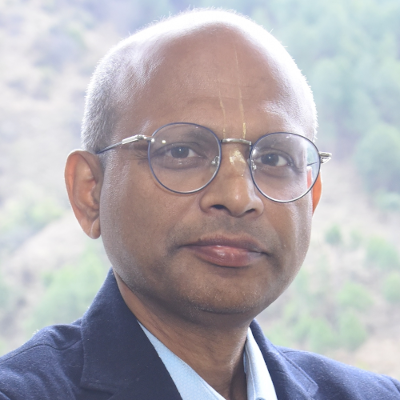
Prof. (Dr.) LD Behera
Director, IIT Mandi, Himachal Pradesh, India
Areas of Expertise: Robotics and Artificial Intelligence
|
Biography:
Prof. Laxmidhar Behera is the Director of the Indian Institute of Technology (IIT) Mandi, a
position he has held since January 2022. He holds the position of senior Professor in the
Department of Electrical Engineering at IIT Kanpur.
Prof. Behera earned his B.Sc. (Engg) and M.Sc. (Engg) degrees from the National Institute of
Technology (NIT), Rourkela, in 1988 and 1990, respectively. He completed his Ph.D. in
Electrical Engineering at IIT Delhi in 1996. He pursued his post-doctoral research in German
National Research Centre for Information Technology, Sankt Augustin.
With over 28 years of research and teaching experience, Prof. Behera has made significant
contributions to intelligent systems and control, vision-based robotics, warehouse automation,
brain-computer interfaces, drone technology, consciousness studies and mental healthcare. He
has established industrial collaborations with organizations such as Tata Consultancy Services
(TCS), Renault Nissan, and BEL Bangalore. He has successfully executed sponsored research
projects of more than 25 Crores.
Prof. Behera has supervised 31 Ph.D. students to completion and currently supervising 14 PhD
students. He has also supervised more than 70 master's dissertations. He has authored three
graduate-level textbooks, and more than 380 publications that include 123 peer-reviewed
journal papers, 238 conference papers, and 26 book chapters.
His book entitled Intelligent Systems and Control published by Oxford University press has
been prescribed as a graduate level text book in many Universities across the world. He
published another book on Intelligent Control of Robotic Systems by CRC press Taylor &
Francis – this book has been selected as the best Engineering book of the year 2020-21.
He has established international research collaborations with ETH, Zurich, University of Texas,
San Antonio, University of Edinburgh, UK, University of Ulster, UK, NAIST, Japan, and
Deakin University, Australia. He has worked as Reader at the University of Ulster, UK during
2007-2009 and has taken up visiting professor assignments at ETH Zurich, and FHG, Germany.
He also worked as TCS affiliate faculty during 2021-2022.
Prof Behera’s team secured 3rd position in the Amazon Robotics Challenge 2017 among top
16 team across the globe and 4th position in the stow-cum-pick event held at Nagoya, Japan.
Six of his papers have been given best paper awards in International/National conferences. He
received the prestigious National Systems Gold Medal by the Systems Society of India in 2023.
He is a distinguished alumnus of NIT Rourkela. He is a fellow of INAE. He is currently serving
as the Associate Editor for IEEE Transaction on SMC: Systems.
Besides AI and Robotics, Prof Behera pursues an active interest in the holistic study of mind,
brain and consciousness within the framework of Indian Knowledge Systems. He carries out
research work concerning consciousness bio-markers through the administration of
anaesthesia, quantum perception, quantum brain, therapeutic impact of Indian classical music,
mantra and yoga on subjects suffering from mental stress and other kinds of psychic disorders.
Title:
Nonlocal Model of Perception
Abstract:
The Indian Knowledge System (IKS) conceptualizes our existence as a superposition of three fundamental energies: pure semantic (consciousness), semantic (mind), and inert (brain). In other words, this framework provides a holistic understanding of cognition, perception, and neurophysiological processes.
By introducing quantum-like entanglement in perception, we propose that self-propelled agents align based on the quantum expectation value of a perception operator, driving collective motion. We shall also reflect on human olfactory perception through the interplay of molecular vibration patterns of odorants and underlying EEG dynamics. Additionally, we explore how high-frequency probes in the megahertz range reveal intricate neural dynamics, particularly in children trained to exhibit near-normal visual perception despite being blindfolded. Building on these foundations, the discussion will conclude with IKS-based interventions designed to enhance cognitive function.
In summary, we propose innovative approaches for improving perception, attention, and memory by integrating ancient wisdom with contemporary neuroscience and quantum-inspired models. This synthesis opens new possibilities for mental health, education, multi-agent coordination, and contemplative sciences through the lens of IKS.
|
 |
|
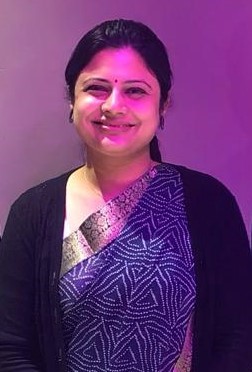
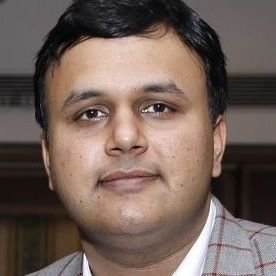
Dr. Sriparna Saha
Associate Professor, IIT Patna
Areas of Expertise: Artificial Intelligence, Machine Learning and Natural Language Processing Technologies
|
Biography:
Dr. Sriparna Saha is currently an Associate Professor in the Department of Computer Science and Engineering, Indian Institute of Technology Patna, India. Her current research interests include natural language processing, generative AI, multiobjective optimization, and biomedical information extraction. She regularly publishes papers in reputed conferences and journals. She is the recipient of the Fulbright-Nehru Academic and Professional Excellence Fellowship 2025, Humboldt Research Fellowship, Google India Women in Engineering Award 2008, INSA Young Associate 2024, INSA Distinguished Lecture Fellow 2025, NASI YOUNG SCIENTIST PLATINUM JUBILEE AWARD 2016, SERB WOMEN IN EXCELLENCE AWARD 2018, Pattern Recognition Letters Associate Editor Award 2023. She received several best paper awards in prestigious venues. For more information, please visit https://www.iitp.ac.in/~sriparna/.
Title:
Harnessing Generative Intelligence for Healthcare: Models, Methods and Evaluations
Abstract:
Generative AI, especially Large Language Models (LLMs) and Multimodal Language Models (MLMs), is creating exciting opportunities in healthcare. However, real-world use is still challenging due to the need for models that are compact, personalized, safe, and capable of handling multiple languages and data types. This work tackles these challenges in three main directions: building specialized models, developing advanced methods for key healthcare tasks, and creating strong evaluation benchmarks. First, we build a small, domain-specific language model for veterinary medicine, a field that is often overlooked. This model is trained from scratch with proper pretraining, fine-tuning, and safety alignment. Second, we design models for summarizing medical inputs that include both text and images, focusing on low-resource and code-mixed languages to help healthcare professionals better understand complex patient data. Finally, we introduce new benchmarks to evaluate model performance in medical settings, including a) M3Retrieve, a large multimodal retrieval benchmark across 5 domains and 16 medical fields, and b) a multilingual trust benchmark that covers 15 languages and 18 detailed tasks. Together, these efforts aim to make generative AI more practical, reliable, and inclusive for healthcare use.
|
 |
|
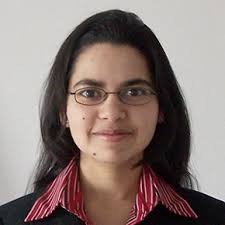
Dr.Abhinav Dhall
Associate Professor, Monash University, Australia
Areas of Expertise: Affective Computing, Computer Vision, Human-Centered AI
|
Biography:
Abhinav Dhall is Associate Professor in the Faculty of IT at Monash University, Australia. He holds a PhD in Computer Science from the Australian National University and previously led the Centre for Data Science at IIT Ropar. He has pursued research at the University of Waterloo, UC San Diego, and Imperial College London. His work on affective computing and deepfake analysis has earned international recognition, including the Best Student Paper Award at ACM Multimedia 2024.
Title:
Multimodal Deepfake Detection Across Cultures and Languages
Abstract:
The growing accessibility of Generative AI based image and video manipulation tools has made the creation of deepfakes easier. This poses significant challenges for content verification and can spread misinformation. In this talk, we explore multimodal approaches that are inspired from user behavior for detecting and localizing manipulations in time. A key focus of our work is on multilingual and multicultural aspects of deepfake detection. Our research draws on user studies, including those focusing on multicultural deepfakes, which provide insights into how different audiences perceive and interact with manipulated media.
|
 |
|
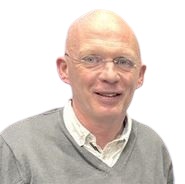
Prof. Richa Singh
Head of CSE, IIT Jodhpur
Areas of Expertise: Biometrics, Pattern Recognition, Face Recognition, Deep Learning
|
Biography:
Richa Singh is a Professor in the Department of Computer Science and Engineering at IIT Jodhpur. Herresearch spans responsible artificial intelligence, machine learning, pattern recognition, biometrics, and medical image analysis. She is a Fellow of the IEEE, IAPR, National Academy of Sciences India (NASI), and the Indian National Academy of Engineering (INAE), an ACM Distinguished Member, and a member of the National Academy of AI (USA). Her honors include the Nasscom AI Gamechangers Award and the Facebook Award for Ethics in AI. She is Founding Co-Editor-in-Chief of ACM AI Letters and Associate Editor-in-Chief of Pattern Recognition. She has also served as the Program Chair of CVPR 2022, General Chair or Program Chair for IJCB/BTAS, FG, and ICMI, and as Area Chair for leading venues such as ICCV, ECCV, and AAAI. From 2019 to 2023, she was Vice President (Publications) of the IEEE Biometrics Council.
Title:
Beyond Single Modalities: Unified Representations for Image, Text, and Audio Understanding
Abstract:
As synthetic media edges closer to perceptual reality, distinguishing authentic content from deepfakes has become a foundational challenge for digital trust. This keynote will focus on building robust multimodal systems to detect and counter deepfakes across images, video, and audio. The deepfake problem will be situated within the broader shift toward multimodal AI, where joint representations of visual, auditory, and textual signals create powerful new detection opportunities—but also introduce fresh vulnerabilities. Drawing on recent work from our group, the talk will unpack core technical challenges, including modality-specific artifacts, cross-modal inconsistencies, temporal misalignment, and generalization to unseen manipulation strategies. Using benchmark datasets, systematic evaluations, and real-world case studies, it will highlight failure modes such as subtle attribute edits, voice–face mismatches, and multilingual audio synthesis. The keynote will conclude with principles for evaluation protocols, deployment practices, and governance frameworks, arguing that deepfake detection must co-evolve with generative models to preserve trust in digital communication at scale.
|
 |
|
Prof. Benoît Macq
University of Louvain, Belgium
Areas of Expertise: Image Processing
|
Biography: Benoit Macq, full professor UCLouvain, is heading the Pixels and Interaction Lab
(PILAB) involved in Artificial Intelligence and Signal Processing applied to image processing.
Benoit Macq was a researcher at Philips RLB, visiting professor at McGill University in
Montreal, at the Ecole Polytechnique Fédérale de Lausanne, at MIT in Boston and at Telecom
Paris Tech.
Benoit Macq was Prorector of UCL from 2009 to 2014. He was in charge of “Service to
Society” and international affairs. He was technological advisor to the Walloon government for
the digital transition and co-designed the Digital Wallonia plan. He is co-founder of 11 spin-off
companies. He is co-founder of the TRAIL institute (Trusted AI labs) with Thierry Dutoit
(U-Mons).
Benoit Macq is a Fellow Member of the IEEE, Editor in Chief of the IEEE Transactions on
Image Processing and Director of the Technology and Society Class of the Royal Academy of
Sciences of Belgium.
Title:
White Matter Matters: Neuro-Image of Connections and Microstructures for Brain Diseases Biomarkers.
Abstract:
White matter forms the brain’s communication network, and its integrity is key to
understanding cognition and brain diseases. This tutorial introduces the core concepts and
practical workflows behind diffusion-based neuro-image processing, from microstructural
modeling to large-scale connectome analysis. We will explore how physical models of diffusion
(DTI, NODDI, DIAMOND) can be combined with transformer architectures, low-rank
adaptation, and physics-informed learning to extract interpretable patterns from complex brain
data. Bridging physics, computation, and neuroscience, this talk highlights how next-generation
imaging pipelines can advance biomarker discovery and personalized brain modeling.
|
 |
|
Mr. Prashant Tiwari
Scientist F, SAG, DRDO, Delhi
Areas of Expertise: Image Manipulation & Cyber Deception
|
Biography:
Prashant Tiwari, Scientist F, SAG, DRDO, Delhi
MTech. Communications Engineering, IIT Delhi
Core Area of work: State of the Art Mobile Testing Laboratory Setup, Mobile Security, DRDO Intranet Upgrade with Defence in Depth with 100+ Network Nodes, Cyber Security Audit of around 50 DRDO centres.
Title:
Image Manipulation & Cyber Deception: Deepfakes and Steganography
Abstract:
This explores the rising threats of deepfakes and digital steganography as tools for deception and covert communication. It will briefly explain how AI enables highly realistic synthetic audio–video content and how data or malware can be hidden within seemingly harmless media. Through recent case studies—including political deepfakes, voice-cloning scams and steganography-based malware attacks—the session highlights real-world impact ranging from fraud and reputational damage to influence operations. This will examine evolving attack techniques, psychological implications and the growing sophistication of AI-enhanced delivery methods. It concludes with emerging countermeasures such as deepfake detection tools, watermarking, steganalysis solutions, legal developments and practical organisational strategies for early detection and response. The aim is to provide security professionals and policymakers with operational insights and actionable steps to combat these rapidly advancing threats.
|

|